




How Often Should Children Get Dental Checkups and Cleanings
Most children benefit from dental checkups and professional cleanings every six months, but the ideal schedule isn't exactly the same for every child. Factors like cavity risk, dental development, oral habits, and overall health all play a role in determining how often your child should be seen. Every recommendation is based on what's happening in your child's mouth today while planning for healthy development tomorrow.
Routine dental visits do much more than keep teeth clean. At Granville Pediatric Dentistry, Dr. Pingel uses each appointment to monitor how your child's teeth, jaws, and airway are developing while looking for opportunities to address concerns before they become more complex. These visits also give families ongoing guidance on oral hygiene, nutrition, and healthy habits that support long-term oral health.
Continue reading to learn when children should first visit the dentist, what happens during routine checkups, when more frequent visits may be recommended, and how preventive care helps support healthy smiles as your child grows.
Quick Overview
- Most children benefit from dental checkups and cleanings every six months, though some may benefit from more frequent visits based on their oral health and development.
- The first dental visit should happen around your child's first birthday or within six months of the first tooth erupting.
- Routine visits help monitor much more than cavities, including jaw growth, bite development, oral habits, and airway health.
- Preventive care allows many dental concerns to be identified and managed before they become more complicated.
- Every appointment includes an evaluation tailored to your child's age, risk factors, and stage of development.
When Should My Child Have Their First Dental Visit?

A child's first dental visit lays the foundation for years of healthy oral development. The American Academy of Pediatric Dentistry recommends scheduling that first appointment by your child's first birthday or within six months of the first tooth erupting, whichever comes first.
While that may sound early, these early visits are designed to establish healthy habits long before dental problems develop. Rather than focusing on treatment, the appointment allows Dr. Pingel to evaluate your child's early oral development, answer your questions, and help your family feel comfortable with routine dental care from the beginning.
A first visit typically includes:
- A gentle examination of your child's gums, newly erupted teeth, and jaw development
- A discussion about feeding habits, pacifier or thumb-sucking, and oral hygiene at home
- Guidance on brushing techniques, fluoride, and what to expect as more teeth erupt
- An opportunity to establish baseline records so future growth and development can be monitored
Starting dental care early also allows Dr. Pingel to identify developmental concerns while they're still easier to manage. Monitoring spacing, jaw growth, tooth eruption, and bite development over time gives families more options if treatment is ever needed later.
Some children may benefit from an evaluation even sooner. Babies who have experienced feeding difficulties or undergone a tongue-tie release often benefit from early monitoring because oral function during infancy can influence jaw development, swallowing patterns, and future oral health.
Beginning routine care early also helps children become familiar with the dental office in a relaxed environment, making future appointments feel more comfortable as they grow.
Why Are Dental Checkups Usually Scheduled Every Six Months?
After your child's first visit, regular preventive appointments become one of the most effective ways to support long-term oral health. For most children, that means visiting the dentist every six months.
This schedule gives Dr. Pingel the opportunity to monitor changes that naturally occur as children grow. Teeth erupt, jaws develop, oral habits change, and cavity risk can shift surprisingly quickly throughout childhood. Seeing your child regularly allows small concerns to be identified before they become larger problems that require more involved treatment.
While six months is the standard recommendation, every child develops differently. Visit frequency is based on each child's individual needs rather than following the same schedule for everyone.
Some children may benefit from more frequent visits if they have:
- A higher risk of cavities due to diet, enamel quality, or previous decay
- Jaw, bite, or airway concerns that require closer monitoring
- Dry mouth caused by medications or certain medical conditions
- Special healthcare needs that affect oral development or daily oral hygiene
Other children with consistently healthy teeth, excellent home care, and low cavity risk may eventually be candidates for less frequent preventive visits as they get older. That decision is always made based on your child's individual oral health, not simply their age.
At Granville Pediatric Dentistry, preventive care isn't built around a fixed schedule. As your child grows, Dr. Pingel continually evaluates whether their current visit frequency remains the best fit for their changing needs.
What Happens During a Pediatric Dental Checkup?
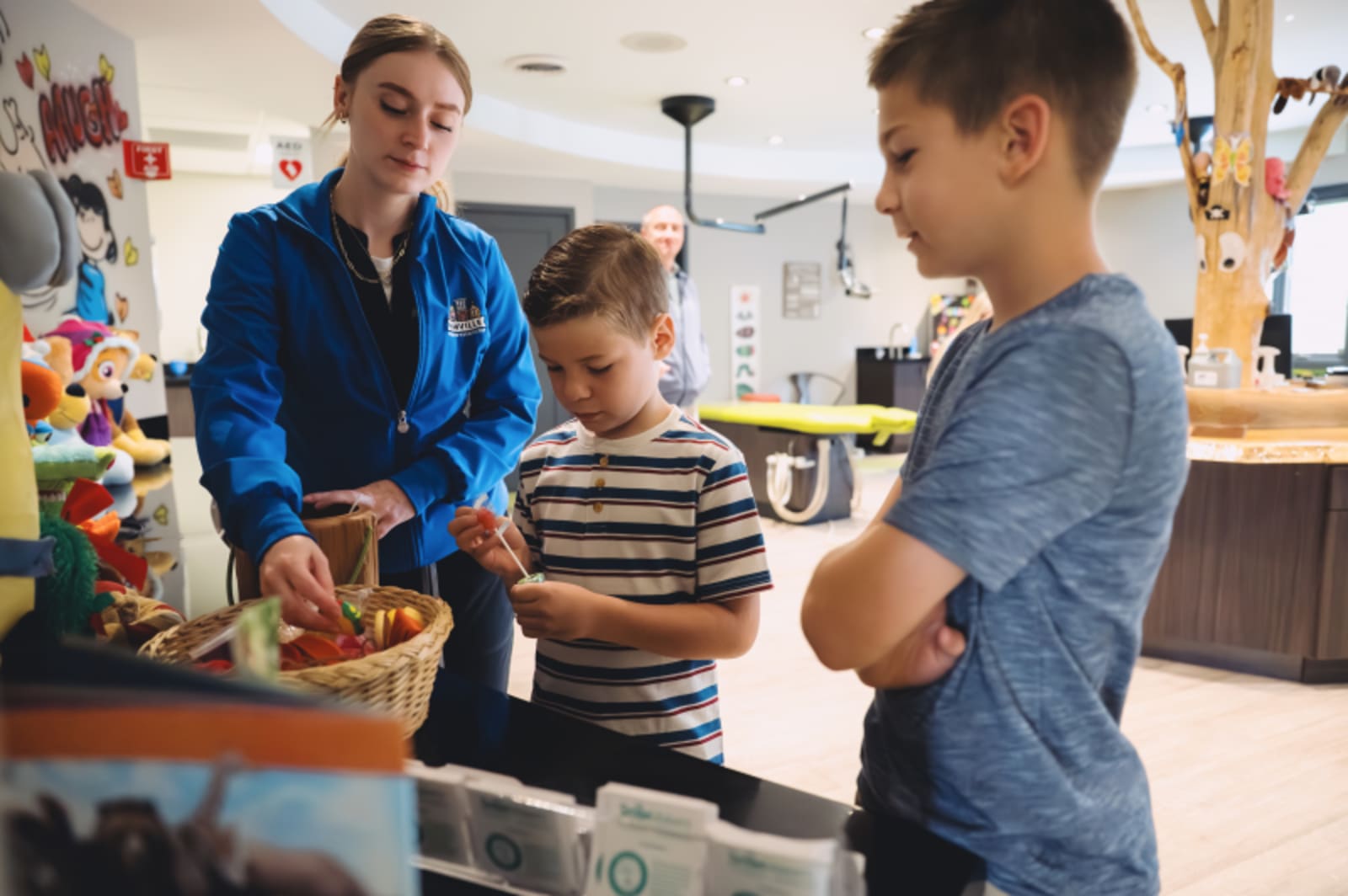
Routine dental visits involve much more than cleaning teeth. Every appointment gives Dr. Pingel an opportunity to evaluate your child's oral health, monitor their development, and provide guidance that supports healthy growth between visits.
Depending on your child's age and stage of development, a typical checkup may include:
- Professional cleaning to remove plaque and tartar that brushing and flossing cannot remove at home
- A dental examination to look for early signs of cavities, enamel changes, or other concerns
- A gum health evaluation to identify inflammation or other changes affecting the supporting tissues
- Monitoring tooth eruption and bite development to track how the teeth and jaws are growing together
- Airway and facial growth assessment to observe patterns that may influence breathing, sleeping, chewing, and long-term development
- Dental X-rays, when appropriate, to evaluate areas that cannot be seen during a visual examination
Every appointment ends with time to discuss what was observed during the visit. Dr. Pingel explains findings in straightforward language, answers your questions, and provides recommendations tailored to your child's age, oral health, and development.
For families whose children have experienced feeding challenges, tongue-tie treatment, or other developmental concerns, these ongoing visits also provide an opportunity to monitor progress over time and ensure healthy growth continues as expected.
Rather than focusing on a single appointment, each checkup builds on the last, allowing Dr. Pingel to follow your child's development through every stage of childhood and adjust preventive care as their needs change.
Tracking Jaw and Bite Development at Routine Visits
Routine dental visits help us do more than monitor your child's teeth. They also allow Dr. Pingel to follow how your child's jaws, bite, and facial structures are developing over time.
Growth happens gradually, which means small changes are often easier to recognize across a series of appointments than during a single visit. As baby teeth are replaced by permanent teeth, regular evaluations help us identify patterns that may benefit from early guidance or continued monitoring.
Some of the developmental changes we routinely evaluate include:
- Crowding or limited space for incoming permanent teeth
- Crossbites or other bite irregularities
- Jaw alignment and overall facial growth
- Narrow palates that may influence bite development
Finding these concerns early doesn't always mean treatment is needed. In many cases, it simply allows us to monitor development closely and recommend the right timing if intervention becomes beneficial later. Because children's jaws are still growing, early evaluation often provides more treatment options than waiting until growth is complete.
These visits also help determine whether your child may benefit from an orthodontic evaluation during the years when growth can be guided most effectively. If you'd like to learn more, our article on early orthodontic treatment explains what parents should know and when screenings are typically recommended.
Why Airway Health Is Part of a Pediatric Dental Exam
A child's oral health is closely connected to the way they breathe, sleep, and grow. While routine dental visits aren't designed to diagnose airway disorders, they can provide valuable insight into how the mouth and facial structures are developing.
During each exam, Dr. Pingel observes features that may influence healthy oral development, including:
- Palate shape and width
- Jaw growth and facial development
- Tongue position and oral function
- Bite relationships and tooth eruption
- Signs of mouth breathing or other functional concerns
These observations become especially meaningful when considered alongside what parents notice at home. Snoring, restless sleep, persistent mouth breathing, feeding difficulties, or a history of tongue-tie treatment all contribute to the bigger picture of a child's development.
If something appears outside the expected pattern, we'll discuss our observations with you and, when appropriate, coordinate care with your child's pediatrician or another healthcare provider. Our goal is to help families recognize concerns early and support healthy development through collaborative care.
This whole-child perspective is an important part of how we approach pediatric dentistry at Granville Pediatric Dentistry, helping us look beyond individual teeth to better understand your child's overall growth.
A General Guide to Dental Visit Frequency by Age
Although every child is different, there are general recommendations that help guide preventive care as children grow.
Infants and Toddlers (Birth to Age 2)
Your child's first visit should take place by their first birthday or within six months of the first tooth erupting. Early visits focus on monitoring development, supporting healthy habits, and helping children become comfortable in the dental office.
Preschool Children (Ages 3 to 5)
As primary teeth finish erupting, routine visits allow us to monitor oral development, reinforce healthy brushing habits, evaluate oral habits like thumb sucking, and identify concerns before they become more complex.
School-Aged Children (Ages 6 to 12)
This stage brings rapid change as permanent teeth begin replacing baby teeth. Regular checkups help monitor tooth eruption, bite development, cavity risk, and whether preventive treatments like sealants may be beneficial.
Teenagers (Ages 12 and Older)
As permanent teeth finish developing, preventive visits continue to focus on cavity prevention, gum health, orthodontic monitoring when appropriate, and encouraging lifelong oral hygiene habits as teens become more independent.
Most children continue with routine six-month visits throughout these stages, although Dr. Pingel may recommend a different schedule based on your child's individual needs and risk factors.
When Might a Child Need More Frequent Dental Visits?
While twice-yearly checkups work well for many children, some benefit from more frequent preventive care. Additional visits allow us to monitor developing concerns more closely while providing extra support to help keep small problems from becoming larger ones.
More frequent appointments may be recommended if your child has:
- A history of cavities or early tooth decay
- Higher cavity risk related to diet or enamel strength
- Difficulty brushing or flossing effectively
- Orthodontic appliances that make cleaning more challenging
- Medical conditions or medications that affect oral health
- A history of feeding difficulties or tongue-tie treatment that warrants continued monitoring
More frequent visits aren't a sign that something is wrong. They're simply another preventive tool that allows us to evaluate progress, reinforce healthy habits, apply preventive treatments when appropriate, and make adjustments before more extensive care becomes necessary.
At Granville Pediatric Dentistry, every preventive schedule is personalized. Rather than following the same calendar for every child, we recommend visit intervals based on your child's oral health, development, and changing needs as they grow.
How Granville Pediatric Dentistry Personalizes Preventive Care

Every child develops differently, which is why preventive care shouldn't follow the exact same schedule for everyone. While six-month checkups are appropriate for many children, our recommendations are always based on what we're seeing during each stage of your child's growth.
Rather than focusing only on whether your child has a cavity, Dr. Pingel evaluates how their oral health and development are progressing over time. That ongoing perspective allows us to recognize subtle changes, answer your questions as your child grows, and adjust care when it's appropriate.
At each preventive visit, we may:
- Monitor changes in tooth eruption, jaw growth, and bite development across multiple appointments
- Recommend a visit schedule based on your child's individual cavity risk and developmental needs
- Discuss questions about brushing habits, nutrition, oral habits, sleep, or other concerns you've noticed at home
- Coordinate with your child's pediatrician, orthodontist, or other healthcare providers if additional evaluation would be beneficial
Families whose children have experienced feeding challenges or tongue-tie treatment often appreciate having those conversations during routine visits as well. Because we follow your child's development over time, we can place those experiences into the broader context of their oral growth and continue monitoring as they get older.
Our goal is to provide preventive care that grows with your child, helping identify concerns early while supporting healthy development through every stage of childhood.
Schedule Your Child's Next Dental Checkup
Whether your child is due for a routine cleaning, ready for their first dental visit, or you're looking for a pediatric dental practice in Granville, our team is here to help.
When you visit Granville Pediatric Dentistry, you'll receive recommendations based on your child's individual needs, clear communication about their oral health, and a preventive approach designed to support healthy development for years to come.
To schedule an appointment or ask a question before booking:
We look forward to helping your child build healthy habits and a positive relationship with dental care that lasts well beyond their next checkup.
Come
on over!
Call (740) 587-7000 or request an appointment online to set up your first visit. We’ll be in touch soon.